
Your Feralhook Guide to Finding the Right Pair
Choosing the right pair of eyeglasses is an important part of your eyewear journey. Your pupillary distance (PD), frame size, face shape, prescription, and lens options all play a role in how your glasses fit, look, and perform. Use this Feralhook guide to understand the key details before selecting and customizing your next pair.
1. Measure Your Pupillary Distance (PD)
Pupillary Distance, or PD, is the distance between the centers of your pupils, measured in millimeters. An accurate PD helps position the optical center of each lens correctly in front of your eyes.
If your prescription already includes your PD, use the value provided. If it does not, you may obtain your PD from an eye-care professional or measure it carefully using an appropriate PD measurement method.
For prescription eyewear, enter your PD accurately during lens customization. Incorrect measurements may affect lens alignment and visual comfort.
2. Choose Eyeglasses for Your Face Shape
Frame shape can change the overall balance and character of your look. Face-shape recommendations are a styling guide—not a rule—so choose the silhouette that feels most like you.
- Round Face: Angular, rectangular, geometric, or upswept frames can add definition and contrast to softer facial curves.
- Oval Face: Oval faces can work with many silhouettes, including rectangle, square, cat-eye, oversized, and statement frames.
- Square Face: Round, oval, cat-eye, and softly curved frames can create contrast with stronger jaw and forehead angles.
- Heart-Shaped Face: Cat-eye, oval, softly rounded, or balanced frames can complement a broader forehead and narrower chin.
- Diamond Face: Oval, cat-eye, browline, and upswept shapes can highlight the eyes and cheekbones.
- Long Face: Taller lenses, oversized silhouettes, and frames with stronger vertical proportions can help create visual balance.
3. Measure Your Frame Size
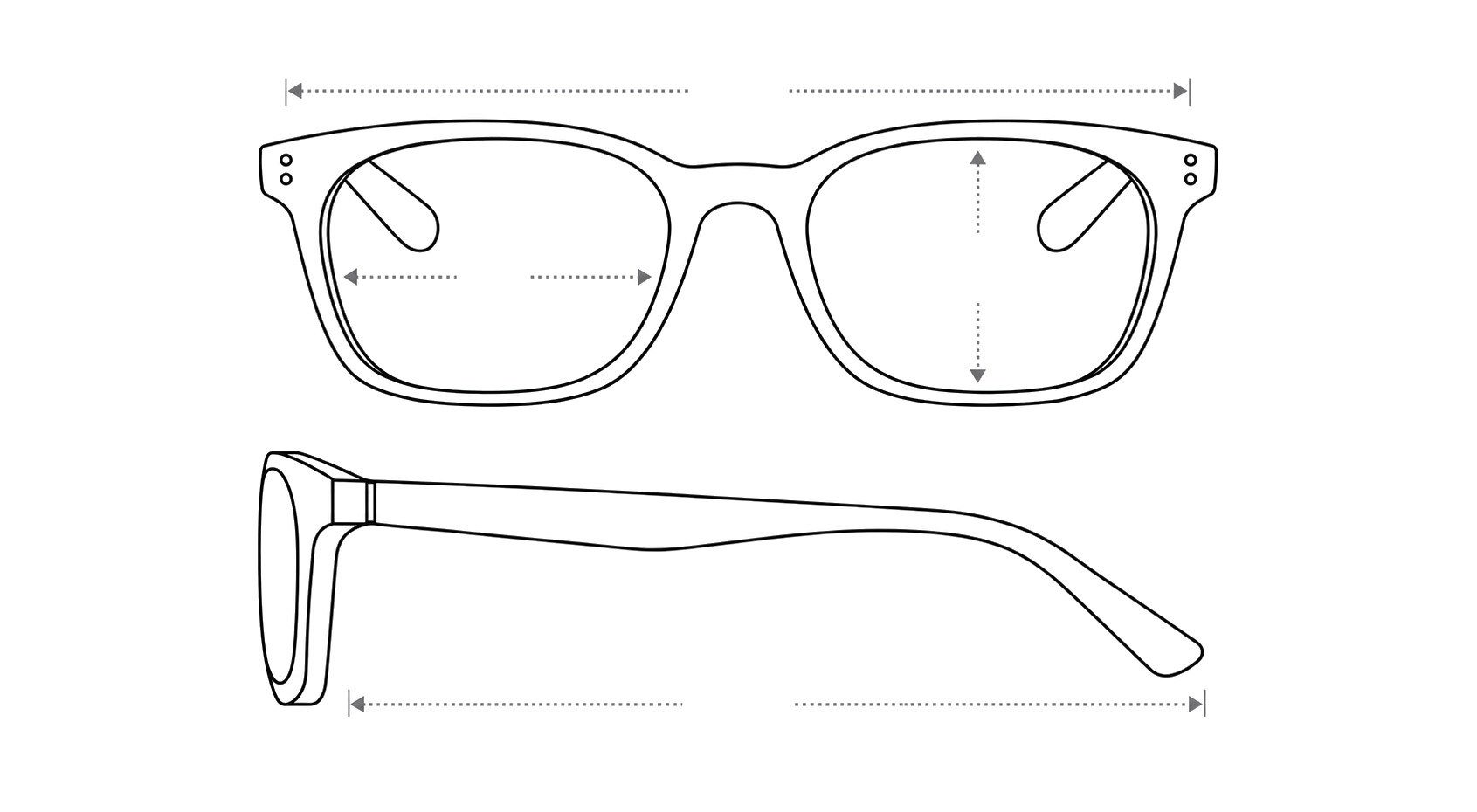
A properly sized frame should sit comfortably without excessive pressure, slipping, or feeling too wide. One of the easiest ways to estimate your size is to compare Feralhook measurements with a pair of glasses you already wear comfortably.
Look inside the temple arm of your current glasses. You may see three numbers such as 53-16-142.
- Lens Width: The horizontal width of one lens at its widest point.
- Bridge Width: The distance between the lenses where the frame sits across your nose.
- Temple Length: The length of the temple arm from the hinge toward the ear.
Compare these measurements with the dimensions listed on the Feralhook product page. Also consider the overall frame width, bridge design, and whether you prefer a narrow, standard, wide, or oversized fit.
4. Fill Out Your Prescription Carefully
If you are ordering prescription eyewear, enter the prescription information exactly as it appears on your valid prescription.
Depending on your prescription and lens type, this may include:
- SPH (Sphere)
- CYL (Cylinder)
- AXIS
- ADD
- PD (Pupillary Distance)
Check all positive (+) and negative (-) signs carefully and make sure the right-eye (OD) and left-eye (OS) values are entered in the correct fields. If you are unsure about your prescription, contact a qualified eye-care professional before ordering.
5. Choose Your Lenses and Coatings
After selecting your frame and entering your vision needs, choose the lens type and available upgrades that best match how you plan to use your glasses.
- Single-Vision Lenses: Designed to correct vision at one primary distance, depending on your prescription.
- Progressive Lenses: Combine distance, intermediate, and near vision zones in one lens without a visible bifocal line.
- Reading Lenses: Designed for near-vision tasks such as reading, using a selected reading strength or prescription where available.
- Photochromic Lenses: Designed to darken in response to UV exposure and return toward clear indoors, depending on the lens technology.
- Polarized Lenses: Designed to reduce reflected glare and are commonly selected for outdoor and sunwear use.
- Anti-Reflective Coating: Helps reduce reflections on the lens surface and can improve visual clarity and lens appearance.
- Scratch-Resistant Coating: Helps improve resistance to everyday surface scratches, although no lens is completely scratch-proof.
- UV Protection: Helps reduce exposure to ultraviolet radiation where included in the selected lens.
6. Consider Blue-Light Lens Options
If you spend long periods using computers, phones, tablets, or other digital screens, you may choose a blue-light filtering lens option where available.
Blue-light filtering lenses are designed to filter a portion of blue-violet light. Individual preferences and comfort can vary, so select this feature based on your daily screen habits and personal needs.
Your Feralhook Eyewear Checklist
- Choose a frame style you love.
- Check the frame dimensions and overall fit.
- Compare measurements with a pair you already wear comfortably.
- Confirm your PD.
- Enter your prescription accurately if prescription lenses are required.
- Select the lens type that matches your vision needs.
- Add lens features or coatings that fit your lifestyle.
- Review all order details before completing checkout.
Need Help Choosing?
If you are unsure about frame sizing, prescription entry, or available lens options, contact the Feralhook support team before placing your order. We can help explain the product and ordering options available on our website.
Feralhook does not provide eye examinations, medical diagnoses, or prescriptions. For medical or vision-health questions, please consult a qualified eye-care professional.
Customer Support: support@feralhook.com