Single PD
One measurement across both eyes.
For example 63 mm
THE FERALHOOK FIT GUIDE · 01
How to measure your pupillary distance
A small measurement that makes a difference. Find your PD so your prescription lenses can be centred for your eyes.
Let's measure
SMALL DETAIL. CLEARER VISION.
Pupillary distance (PD) is the distance between the centres of your pupils, measured in millimetres. It helps position the optical centres of your lenses. It is different from your frame size.
One measurement across both eyes.
For example 63 mm
A separate measurement from the centre of your nose to each pupil. Right and left can differ.
For example 31 / 32 mm
These numbers are examples, not suggested values. Use your own measurement. Do not simply halve a single PD to guess your right and left values.
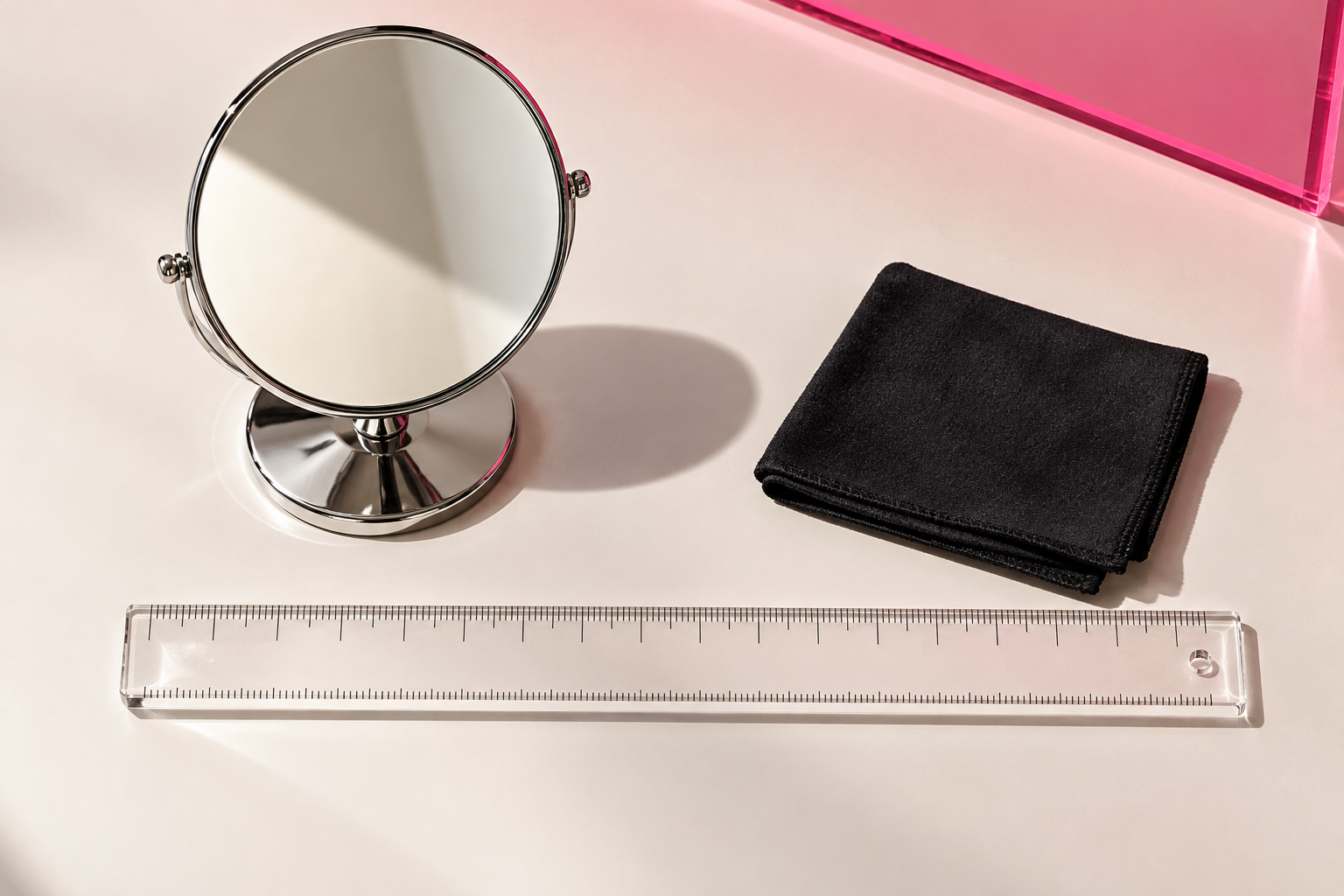
BEFORE YOU START
Already have a PD from your optician? Use that measurement, checking whether it is for distance or near vision.
THE MIRROR METHOD
This at-home method measures one pupil-to-pupil value. For dual PD or specialist lens measurements, ask your optician.
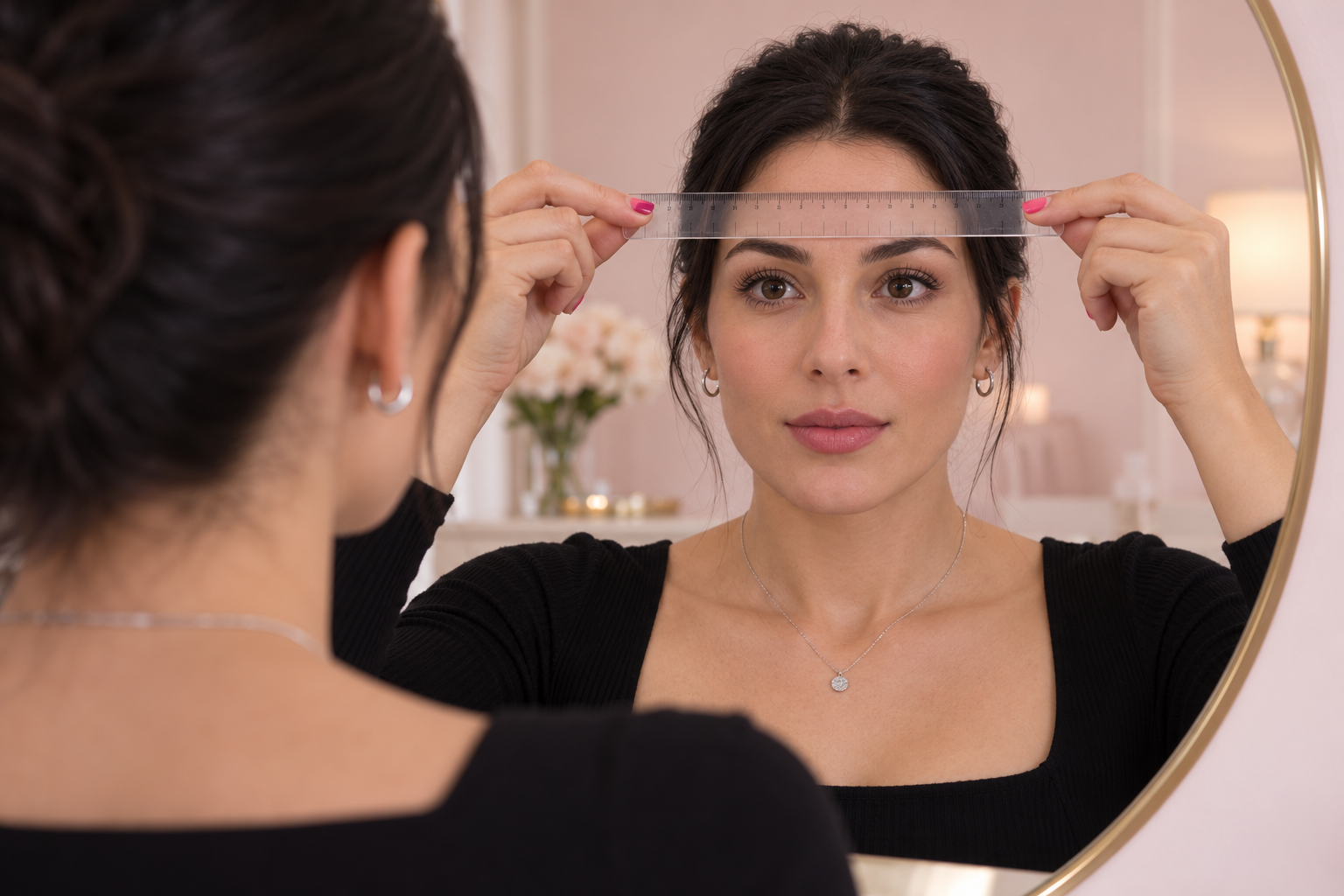
Stand about 8 inches (20 cm) away. Look straight ahead with your head level.
Hold the ruler across your brow, close to your eyes without touching them.
Close your right eye. With your left eye open, align the ruler's 0 mm mark with the centre of your left pupil.
Keep your head and ruler still. Open your right eye and close your left. Read the mark at the centre of your right pupil.
Repeat the full process two or three times. Record the consistent result in millimetres. If your readings differ, ask an optician to confirm your PD.
PRINT. CHECK. MEASURE.
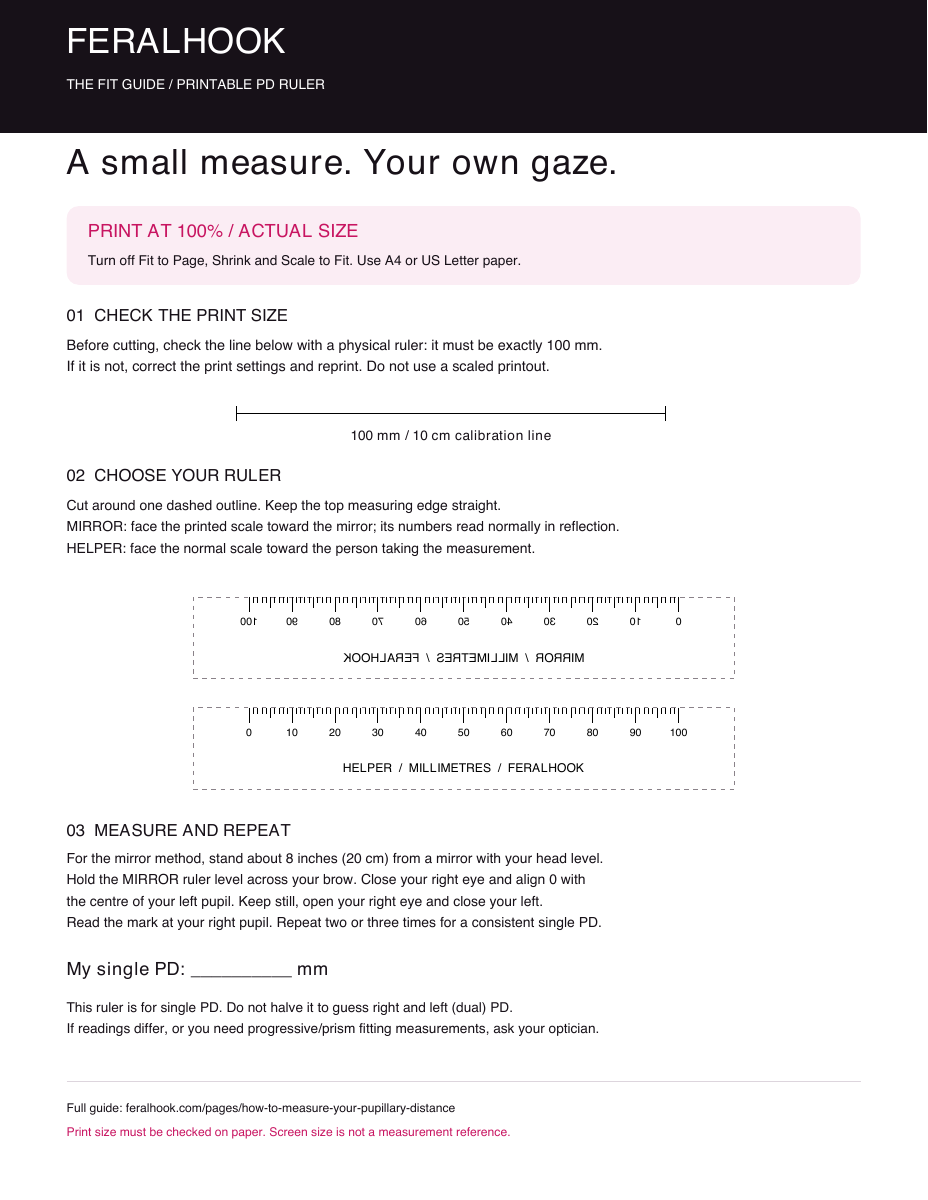
Download our FERALHOOK ruler with a mirror-reading scale, a helper scale and step-by-step instructions.
PDF · 1 page · A4 or US Letter paper
Use the downloaded PDF for printing. The preview is not to scale.
A FEW THINGS TO KNOW
Not always. Check for “PD” or “pupillary distance”. If it is missing, ask your optician for the measurement or use the single-PD steps above.
No. Your eyes turn inward for near tasks, so near PD is different. Use the value specified for your lenses; do not subtract a fixed amount yourself.
These lenses can need more precise or additional fitting measurements. Ask your optician to confirm the required PD and fitting information before ordering.
Do not guess or use an average PD. An optician can measure it for you. Our team can help you identify where to enter a confirmed measurement.
SAME VISION. MORE YOU.

For returns, please follow our return instructions and return address.
loading